
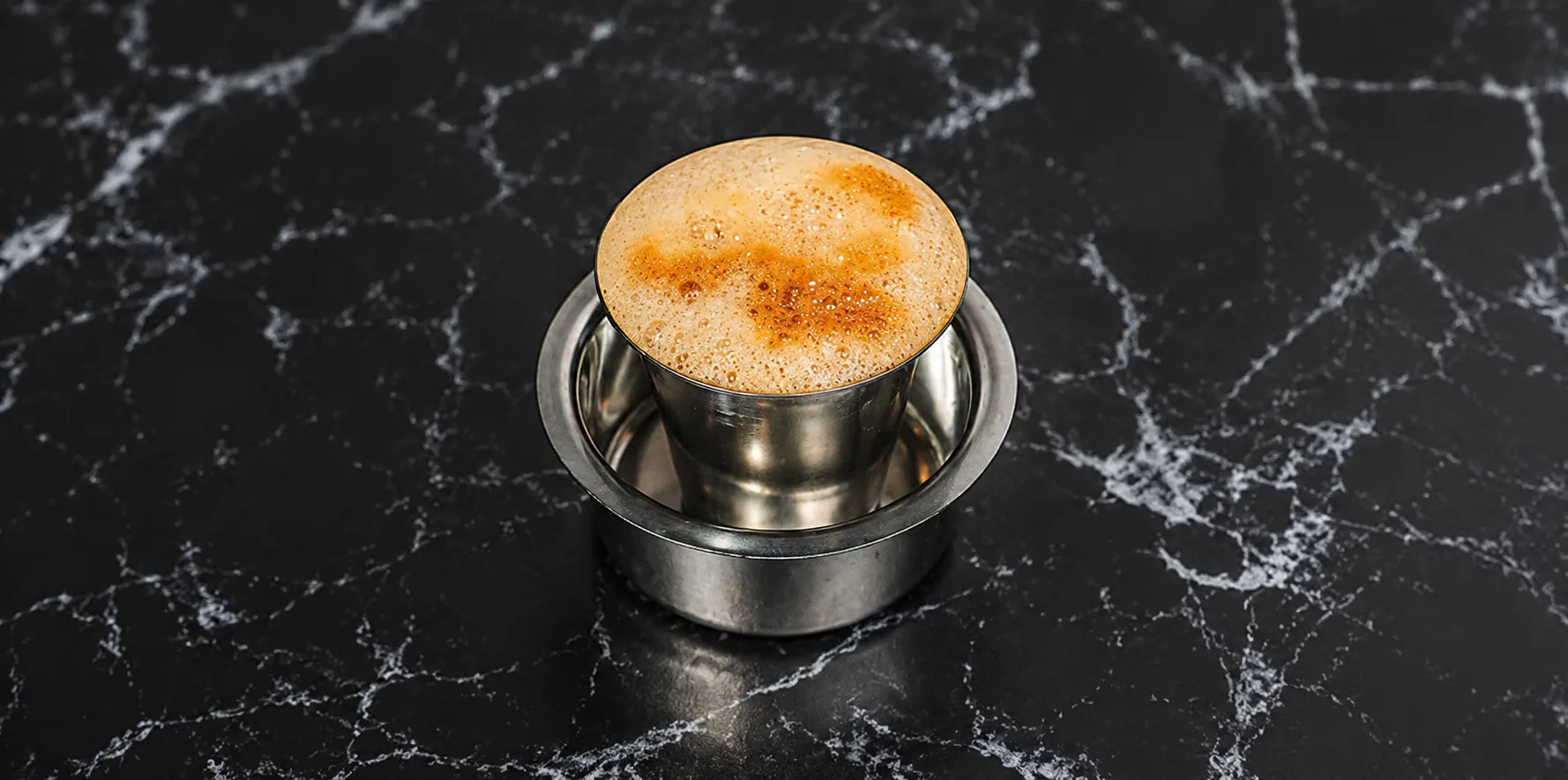
Finding the Best South Indian filter coffee in Warrenville IL is often less about choosing a café and more about understanding a very specific drinking culture. South Indian filter coffee is not designed as a quick caffeine fix or a trendy beverage. It is built around slow brewing, milk balance, aroma depth, and a traditional serving style that has remained consistent for generations.
In Warrenville, Illinois, where coffee culture is mostly shaped by espresso shots, lattes, and drip-based drinks, South Indian filter coffee stands out because it follows a completely different philosophy—one that prioritizes patience, texture, and ritual over speed and customization.
Table of Contents
- What people expect when searching for South Indian filter coffee
- What defines South Indian filter coffee
- The brewing process behind decoction
- Why tumbler and dabarah serving matters
- How coffee fits into South Indian meals
- What first-time drinkers often notice
- South Indian coffee culture in Warrenville, Illinois
- Food pairings that enhance filter coffee
- Why this coffee style is gaining attention in the U.S.
- FAQs
- Final dining perspective
What people expect when searching for South Indian filter coffee
When someone searches for Best South Indian filter coffee in Warrenville IL, the intent is usually practical and experience driven. Most users want to understand what authentic filter coffee tastes like, where it can be experienced locally, and how it differs from standard café-style coffee.
For Indian families living in Illinois, the search is often connected to nostalgia and familiar breakfast habits. For new diners, it is curiosity about a coffee style that looks simple but carries a strong cultural identity.
What defines South Indian filter coffee
South Indian filter coffee is characterized by its smooth, milk-forward taste and aromatic depth. Unlike espresso, which focuses on intensity and bitterness, filter coffee is balanced and layered.
The drink is prepared using:
- Fresh coffee decoction
- Hot milk
- Light sweetness (optional)
- A natural frothy finish
The result is a coffee that feels heavier and more textured than regular café coffee, yet smoother on the palate.
The brewing process behind decoction
The foundation of South Indian filter coffee is the slow extraction process that produces a concentrated coffee liquid called decoction.
Finely ground coffee is placed in a traditional metal filter, and hot water is poured over it. Over time, gravity slowly extracts the essence of coffee, creating a strong, aromatic concentrate.
This decoction determines:
- Strength of flavor
- Aroma intensity
- Final balance with milk
Unlike machine-based brewing, this process is slow and naturally controlled, which contributes to its distinct taste profile.
Why tumbler and dabarah serving matters
One of the most recognizable elements of South Indian filter coffee is the traditional tumbler and dabarah serving method.
Pouring between vessels→Aeration→Froth formation
The coffee is poured repeatedly between a steel tumbler and a shallow dabarah plate before serving. This creates a light froth and slightly cools the beverage for immediate drinking.
This process:
- Enhances aroma release
- Improves texture and mouthfeel
- Creates a signature frothy top layer
- Makes the drinking experience more interactive
It is a simple technique, but it significantly changes how the coffee is perceived.
How coffee fits into South Indian meals
In South Indian food culture, coffee is traditionally part of a structured meal rather than a standalone drink. It is typically consumed at the end of a meal, acting as a finishing element.
A typical sequence includes:
- Idli, dosa, or vada as the main dishes
- Chutneys and sambar as accompaniments
- A short pause after eating
- Followed by hot filter coffee
This structure reflects how coffee is used not just for taste, but for completing the dining experience.
What first-time drinkers often notice
People trying South Indian filter coffee for the first time in Warrenville often observe a few key differences:
- The aroma is stronger and more roasted than expected
- The texture feels creamy due to milk balance
- The froth adds a smooth mouthfeel
- It tastes more complete when paired with food
These characteristics often surprise those who are used to lighter or more acidic coffee styles.
South Indian coffee culture in Warrenville, Illinois
In Warrenville, Illinois, South Indian filter coffee is usually found in vegetarian Indian restaurants rather than standalone coffee shops. These restaurants serve coffee as part of a full meal experience rather than as a separate café product.
Within this setting, A2B (Adyar Ananda Bhavan) on Diehl Road is one of the known dining spots where traditional South Indian meals are served, including filter coffee prepared in its classic form.
It reflects a dining approach where coffee is not the highlight on its own but an essential part of the overall meal structure.
Food pairings that enhance filter coffee
Filter coffee is traditionally paired with South Indian dishes that balance its richness and flavor intensity.
Common combinations include:
- Masala dosa with spiced potato filling
- Soft idli with sambar and chutneys
- Crispy medu vada
- Pongal with ghee and pepper
These pairings create contrast soft textures, and mild spices complement the bold, aromatic coffee.
Why this coffee style is gaining attention in the U.S.
South Indian filter coffee is gradually gaining visibility in the United States due to increased interest in regional Indian cuisine and traditional food preparation methods.
Key reasons include:
- Growing curiosity about authentic global coffee traditions
- Preference for less processed, traditional beverages
- Cultural familiarity among Indian diaspora communities
- Social media exposure of South Indian food culture
Unlike modern café drinks, filter coffee is simple, ingredient-focused, and rooted in tradition.
Frequently Asked Questions
What makes South Indian filter coffee different from regular coffee?
South Indian filter coffee is made using a slow drip brewing method that produces a concentrated decoction. This is mixed with milk to create a smooth, aromatic drink that is less acidic and more balanced than regular coffee.
Is South Indian filter coffee strong?
It has a strong flavor profile due to the concentrated decoction, but it is usually balanced with milk. The strength can vary depending on the coffee-to-milk ratio, making it flexible for different preferences.
Why is tumbler and dabarah used?
The tumbler and dabarah method is used to aerate the coffee while pouring, which creates froth and enhances aroma. It also slightly cools the beverage, making it more pleasant to drink immediately after serving.
What foods go best with filter coffee?
Traditional South Indian foods like dosa, idli, medu vada, and pongal pair best with filter coffee because they balance its richness and enhance the overall meal experience.
Final dining perspective
South Indian filter coffee represents a simple yet deeply rooted culinary tradition built on slow preparation, balanced flavors, and cultural ritual. In Warrenville, Illinois, its presence reflects the growing diversity of regional Indian dining experiences and the steady interest in food that goes beyond standard café offerings.
Within local vegetarian dining spaces such as A2B on Diehl Road, it continues to serve its traditional role—bringing a meal to a close, balancing the palate, and preserving a familiar taste of South Indian coffee culture in a new geographic setting.