Finding a satisfying Pongal near me is not simply about locating a bowl of rice and lentils. Diners are usually looking for the soft, creamy texture of properly cooked Ven Pongal, the aroma of ghee, the warmth of pepper and cumin, and the familiar combination of sambar and coconut chutney. For people seeking traditional South Indian Pongal in Illinois, freshness and correct texture matter as much as location.
Pongal is strongly associated with Tamil food culture and the harvest festival of the same name. The four-day festival is connected with gratitude, agriculture, family gatherings, and abundance. Ven Pongal, however, is not limited to festive occasions; it is also a popular South Indian breakfast and comfort meal.
Table of Contents
- What Is Traditional Ven Pongal?
- Why Does Pongal Require Careful Cooking?
- What Should You Look for When Ordering Pongal?
- Where Can You Find South Indian Pongal in Illinois?
- What Should First-Time Diners Order with Pongal?
- Why Pongal Fits Illinois Dining Habits
- Frequently Asked Questions
- A Comforting South Indian Meal Close to Home
What Is Traditional Ven Pongal?
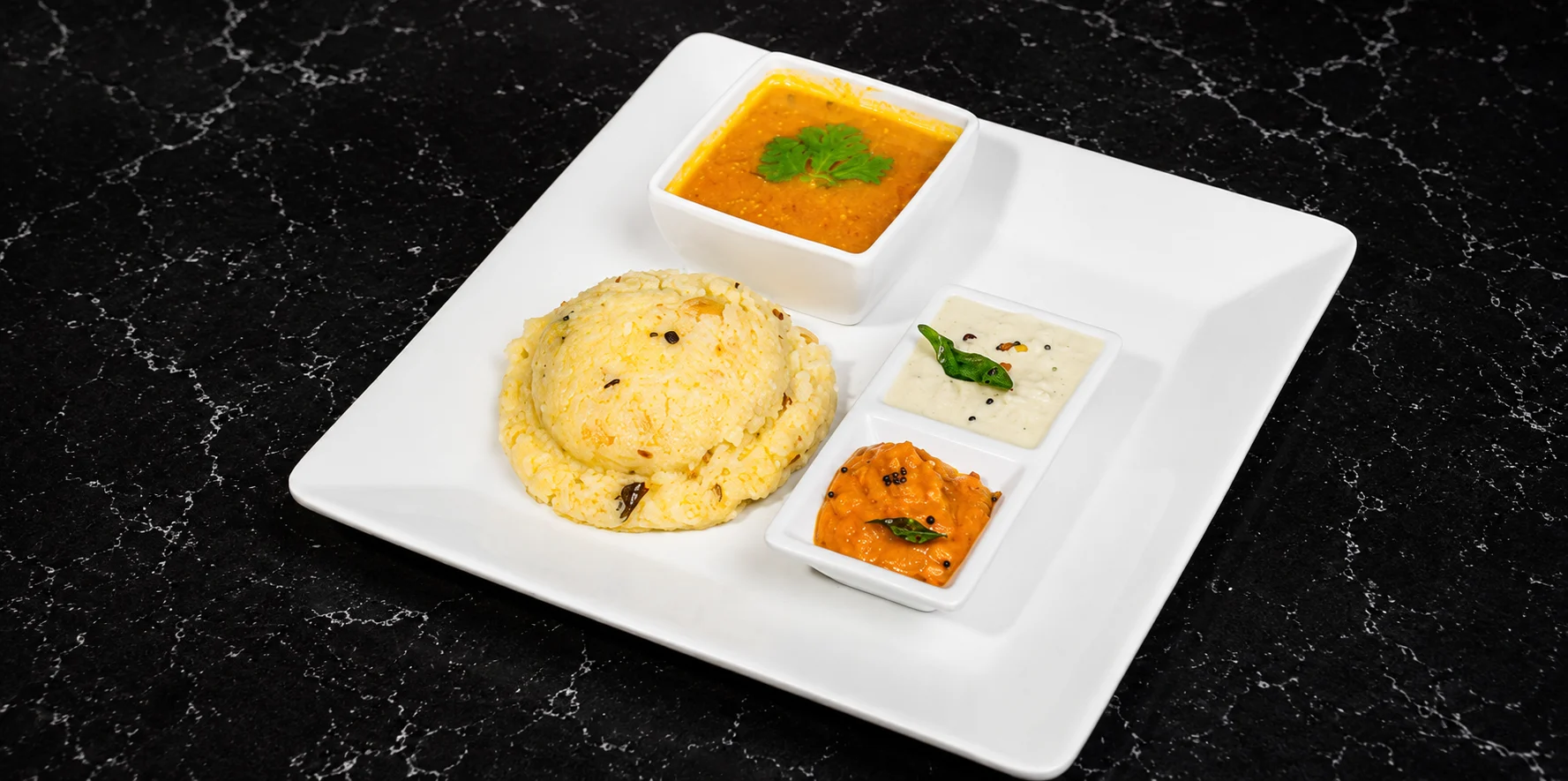
Ven Pongal is a savory South Indian dish made by cooking rice and split yellow moong dal until soft, then seasoning the mixture with ghee, cumin, black pepper, ginger, curry leaves, and often cashews. It is usually served hot with sambar and coconut chutney.
“Ven” refers to the pale savory version, while “Pongal” is associated with bubbling or overflowing, a symbol of abundance. This distinguishes Ven Pongal from sweet Pongal, which commonly uses jaggery and is more closely associated with festivals and religious offerings.
Unlike dosa, which is valued for crisp edges, or idli, which should be light and fluffy, Pongal depends on softness. Rice and dal should come together into a spoonable consistency. The finished dish should feel rich without becoming oily and peppery without becoming aggressively spicy.
Why Does Pongal Require Careful Cooking?
Good Pongal relies on controlled texture, freshly prepared tempering, and balanced seasoning. The rice and moong dal must cook until soft, while the ghee tempering should release the aroma of cumin, pepper, ginger, curry leaves, and cashews without overpowering the mild base.
Lightly roasting moong dal before cooking can deepen its nutty aroma. Crushed black pepper gives the dish a warmer, more rounded heat than finely ground pepper. The hot tempering should be mixed through the rice and dal so its aroma is present in every spoonful.
The accompaniments also matter. Sambar adds tanginess, vegetables, and lentil depth, while coconut chutney gives a cool, mild contrast. Together, they prevent the soft Pongal from feeling one-dimensional.
What Should You Look for When Ordering Pongal?
When choosing a Pongal restaurant near you, look for a dish that is served hot, has a soft and cohesive texture, carries a clear ghee aroma, and includes fresh sambar and chutney. Pongal should be loose enough to eat comfortably but not watery or sticky.
A well-made serving often has visible cumin, pepper, curry leaves, and roasted cashews. The first bite should feel mild, followed by pepper, ginger, and ghee.
Freshness is important because Pongal thickens as it rests. A batch held too long may become dense, while freshly made Pongal remains softer and more fragrant. Diners searching for hot Pongal near me or freshly made Pongal in Illinois may benefit from checking breakfast availability or asking when the dish is prepared.
Where Can You Find South Indian Pongal in Illinois?
After understanding what makes the dish traditional, the next question is where to find it locally. For diners in Warrenville and nearby western suburbs, A2B Illinois is one option to consider. Its official menu lists Ghee Pongal, and the restaurant is located at 28244 Diehl Road in Warrenville.
The Warrenville location may also suit diners coming from Naperville, Aurora, and nearby communities who are searching for a South Indian breakfast in Illinois or a vegetarian restaurant serving regional dishes. Rather than treating Pongal as an isolated item, diners can enjoy it as part of a broader South Indian tiffin meal.
Because Pongal is traditionally vegetarian, it fits naturally within A2B’s South Indian vegetarian menu. The dish can appeal to longtime fans of Tamil cuisine, families introducing children to milder Indian foods, and first-time diners who want something softer and less spicy than many curries.
What Should First-Time Diners Order with Pongal?
First-time diners should begin with Ghee Pongal served with sambar and coconut chutney. For more texture, add a medu vada; for a broader breakfast experience, share an idli or dosa; and finish with South Indian filter coffee if available.
For a light breakfast, Pongal with sambar and chutney keeps the focus on its creamy texture and pepper-cumin seasoning. For a traditional tiffin combination, pair it with medu vada; the contrast between soft Pongal and a crisp vada makes the meal more satisfying.
Families can order Pongal alongside idli and dosa, giving children and first-time diners several textures to try. A weekend brunch can combine Pongal, dosa, and filter coffee. A2B’s official site currently lists morning service on Saturdays and Sundays, although diners should confirm current timings before travelling.
Why Pongal Fits Illinois Dining Habits
Pongal works well for several common dining occasions in Illinois. It is warm enough for cold mornings, filling without requiring a heavy meal, and naturally suitable for vegetarian diners. Its soft texture also makes it approachable for children and older family members.
For office lunches, Pongal can offer a simpler alternative to a large thali or rich curry meal. For weekend family dining, it pairs easily with shareable tiffin dishes. During community gatherings and South Indian cultural celebrations, it carries an added sense of familiarity because of its connection to Tamil traditions.
It also answers a practical dining need. People are not always searching for the most elaborate Indian dish; sometimes they want an authentic Indian breakfast in Illinois that feels warm, recognizable, and easy to enjoy. Pongal meets that need through technique rather than complexity.
Frequently Asked Questions
Is Ven Pongal the same as sweet Pongal?
No. Ven Pongal is savory and usually made with rice, moong dal, ghee, cumin, black pepper, ginger, curry leaves, and cashews. Sweet Pongal generally includes jaggery and may contain cardamom, raisins, or nuts. Ven Pongal is commonly eaten as breakfast or tiffin, while sweet Pongal is often prepared for festivals and offerings.
Is Pongal usually spicy?
Pongal is generally mild, but it has noticeable warmth from black pepper and ginger. It is not usually driven by red chilli heat. The sambar served alongside it may be spicier than the Pongal itself. Diners who prefer mild food can enjoy it mainly with coconut chutney, while spice lovers can add more sambar.
Where can I find Ven Pongal near Naperville, Illinois?
Diners near Naperville can check South Indian vegetarian restaurants in nearby Warrenville. A2B Illinois lists Ghee Pongal on its official menu and operates from Diehl Road in Warrenville, making it a practical option for people searching for Ven Pongal near Naperville, IL or traditional South Indian Pongal in the western suburbs.
Is Pongal suitable for a vegetarian breakfast?
Yes. Traditional Ven Pongal is a vegetarian dish made primarily from rice, moong dal, ghee, and spices. It is commonly served with vegetarian sambar and coconut chutney. Diners following a vegan diet should ask whether ghee is used and whether an alternative is available, because ghee is central to the traditional version.
A Comforting South Indian Meal Close to Home
For diners searching where to eat Pongal in Illinois, the most useful signs are freshness, soft texture, fragrant tempering, and well-prepared accompaniments. Traditional Ven Pongal is meaningful not because it is complicated, but because careful cooking turns basic ingredients into a balanced and comforting meal.
A2B Illinois brings this familiar South Indian breakfast option to Warrenville and the surrounding western suburbs. It is likely to appeal to vegetarian restaurant diners, families exploring regional Indian breakfasts, and anyone who prefers warm, savory comfort food over a heavy or intensely spicy meal. In Illinois’s growing Indian dining landscape, Pongal offers a direct connection to everyday South Indian food culture.